

Quick answer: Metal 3D printers build solid metal parts layer by layer using fine metal powder or wire. A heat source, usually a laser or electron beam, melts the material at precise points based on a digital design. Each layer fuses to the one below it until the whole object takes shape.
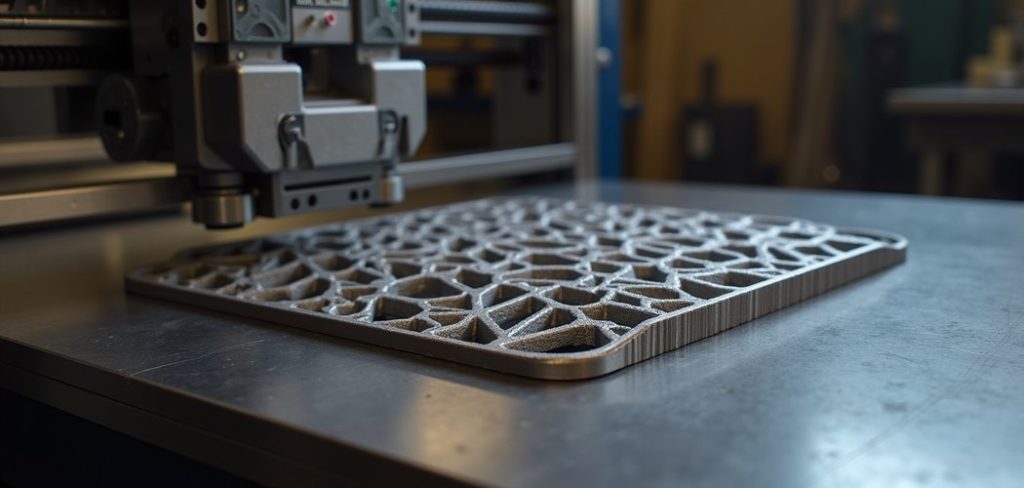
Metal 3D printing sounds like something ripped from a sci-fi script, yet it quietly builds real products in aerospace, medicine, and automotive engineering as you read this.
Boeing, GE, and SpaceX all lean on it to make parts that would be nearly impossible, or absurdly expensive, to produce any other way. Think lightweight jet engine components. Think custom hip implants shaped to a single patient’s bone.
The technology is slowly rewriting the rules of how we make metal things.
So how does a machine turn a pile of loose metal powder into something strong enough to survive inside a jet? That question sits at the heart of this guide.
What follows breaks the process into plain language, walks through the main printing methods, and lays out the steps one at a time.
Along the way, you’ll pick up the common headaches operators face, the genuine advantages, and a fair comparison with older manufacturing methods.
None of this requires an engineering degree. If you’re curious, that’s enough. In this guide on how do metal 3d printers work, we’ll cover everything from the basics of the technology to troubleshooting common issues and exploring its potential applications.
How Does Metal 3D Printing Work?
Metal 3D printing, sometimes called metal additive manufacturing, makes objects by adding material one thin layer at a time. That’s the key word: adding.
Rather than cutting or drilling away from a solid block, the printer builds the part from the ground up.
It begins with a 3D digital model, slices that model into hundreds or even thousands of horizontal layers, then recreates each one using melted metal.
Heat does the heavy lifting. A laser or electron beam scans across a bed of metal powder, or a stream of metal wire, and melts only the spots that match the design.
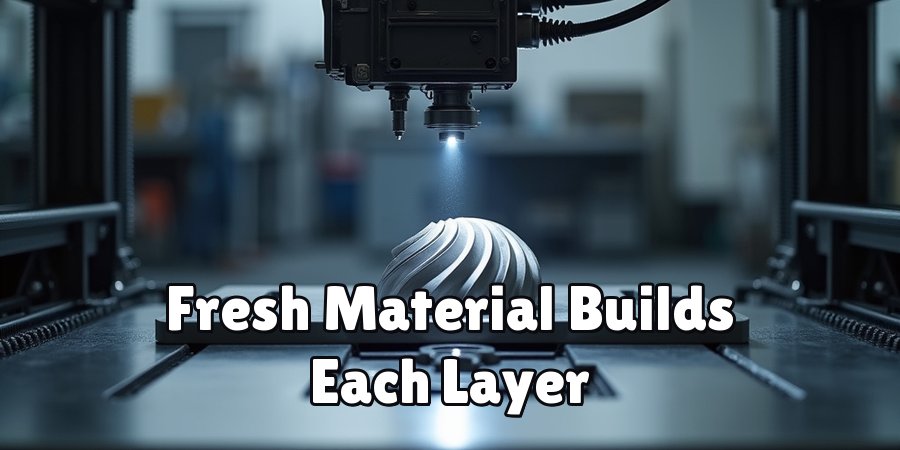
Once a layer cools and hardens, the printer lays down fresh material on top and repeats. Layer after layer, these fused slices stack into a dense metal object that’s ready for finishing.
It’s slow, deliberate work, which may explain why the results tend to be so precise.
What Are the Main Types of Metal 3D Printing?
Not every metal 3D printer works the same way. The technology branches into several methods, each suited to particular materials, budgets, and jobs. Here are the ones you’re most likely to run into.
Powder Bed Fusion (PBF)
The most common category by far. A laser or electron beam melts fine metal powder that’s been spread across a build plate. This family includes Selective Laser Melting (SLM) and Direct Metal Laser Sintering (DMLS). If you’ve seen a photo of a glowing powder bed, chances are you were looking at PBF.
Directed Energy Deposition (DED)
Here, metal powder or wire feeds through a nozzle and melts the moment it’s deposited. DED handles large parts well. It also happens to be one of the few methods that can repair existing components rather than only making new ones, which gives it a niche all its own.
Binder Jetting
A liquid binding agent glues metal powder together, layer by layer. The green part then goes into a furnace, where the metal actually fuses. Binder jetting tends to be faster and cheaper up front, though it usually demands more post-processing before a part is truly usable.
Electron Beam Melting (EBM)
Close cousin to powder bed fusion, but it swaps the laser for an electron beam and does its work inside a vacuum. EBM appears to suit high-strength materials especially well, titanium being the obvious example.
Which one should you reach for? Choose Powder Bed Fusion when detail and precision matter most. Pick Directed Energy Deposition for large builds or repair work. Lean toward Binder Jetting if speed and cost outweigh your need for immediate strength.
7 Simple Steps on How Do Metal 3D Printers Work
The process moves through a fairly clear sequence, from digital file to finished part. Here’s how it plays out.
Step 1: Create the 3D Model
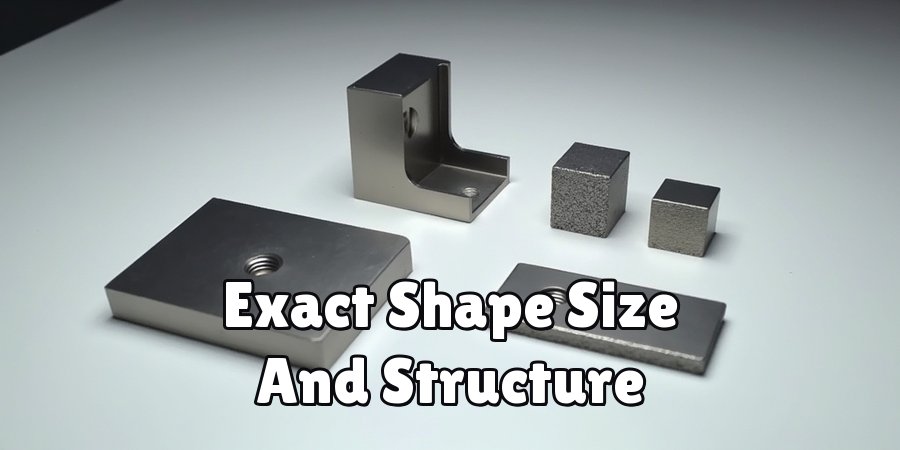
It all begins at a screen. Engineers use computer-aided design (CAD) software to build a detailed 3D model of the part. This file spells out the exact shape, size, and internal structure the printer needs to produce.
Step 2: Slice the Model into Layers
Slicing software takes that 3D model and chops it into hundreds or thousands of thin horizontal layers. It also writes the instructions the printer will follow, right down to where support structures belong.
Step 3: Prepare the Printer and Powder
The operator loads metal powder or wire into the machine and sets up the build plate. Many printers run inside a controlled environment, using inert gas or a vacuum so the metal won’t react with oxygen while it melts. Skip this step, and you risk a compromised part.
Step 4: Spread the First Layer
A recoater blade or roller sweeps a thin, even layer of metal powder across the build plate. Layer thickness typically falls between 20 and 100 microns. That’s thinner than a human hair, which gives you some sense of the precision involved.
Step 5: Melt the Metal
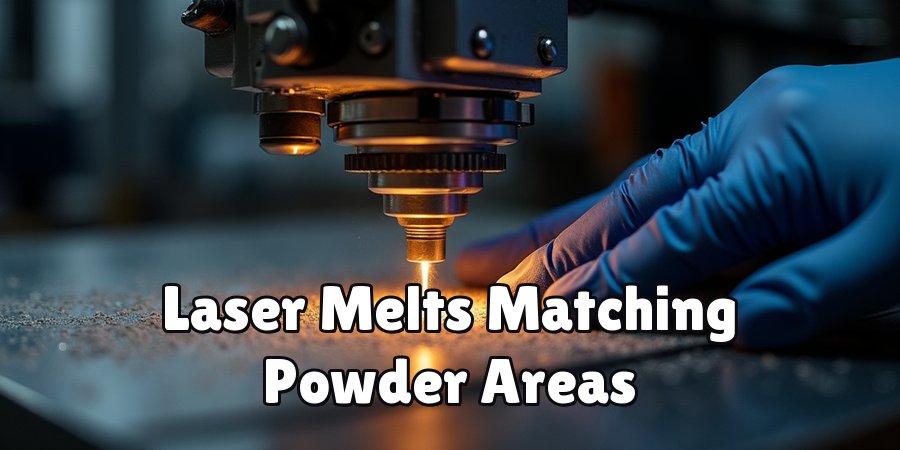
A laser or electron beam scans the powder bed, melting only the areas that match the current layer. The molten metal fuses at once and starts to solidify as it cools. Blink, and you’d miss it.
Step 6: Repeat Layer by Layer
The build plate drops a fraction, fresh powder is spread on top, and the beam melts the next layer, bonding it to the one beneath. Round and round the cycle goes until the part is done. Depending on the job, this can stretch from a few hours to several days.
Step 7: Remove and Finish the Part
When printing wraps up, the operator lifts out the part and clears away loose powder. Post-processing might involve heat treatment, cutting off support structures, machining, and polishing before the piece reaches its final quality. This final stage often takes longer than newcomers expect.
Following these steps on how do metal 3d printers work, you now have a basic understanding of the process.
What Are the Common Metal 3D Printing Problems?
Even sophisticated machines run into trouble. Warping shows up often, driven by the fast heating and cooling that leaves internal stress locked inside the metal.
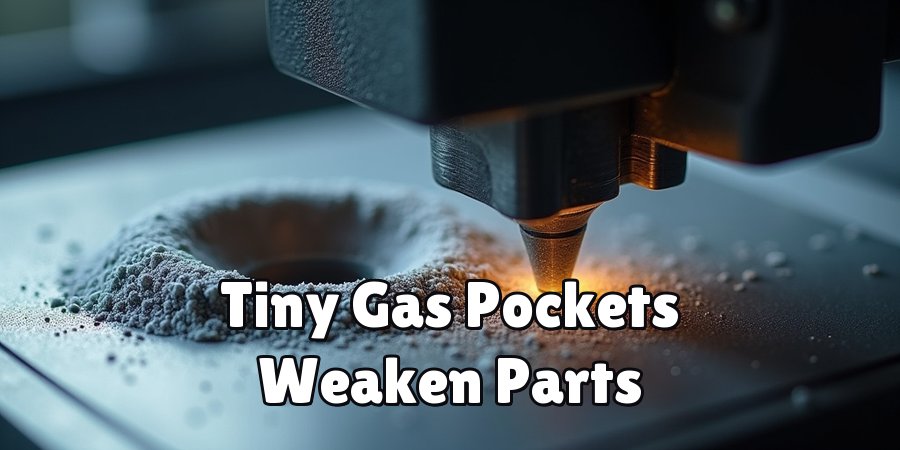
Porosity is another familiar culprit, where tiny gas pockets form inside the part and quietly weaken it. Poor surface finish and uneven layer bonding tend to plague operators who haven’t dialed in their settings yet.
Then there’s the matter of cost and speed. Metal powder isn’t cheap. The machines carry eye-watering price tags, and printing anything large eats up serious time.
Support structures waste material and can be fiddly to remove without damaging the part.
A skilled operator sidesteps many of these issues by calibrating the machine properly and matching parameters to the specific material, which may be the single biggest factor separating a good print from a scrapped one.
What Are the Advantages of Metal 3D Printing?
Metal 3D printing earns its keep when you need shapes that older methods simply can’t make. Internal channels, lattice structures, organic geometries- all produced in a single build with no assembly required.
That kind of freedom lets engineers design components that are lighter yet still strong, which carries enormous weight (or rather, saves it) in aerospace and medical work where every gram counts.
The method also trims waste and speeds up prototyping. Since it adds material only where the design calls for it, far less ends up as scrap compared with carving away from a solid block.
Manufacturers can print a custom, one-off part on demand, with no expensive mold or tooling required. For low-volume, high-value products, that flexibility saves both time and money, sometimes dramatically.
Metal 3D Printing vs. Traditional Manufacturing
Machining, casting, and forging have kept industry humming for well over a century. Their strength lies in churning out large volumes of identical parts at a low cost per unit. Once the tooling is set up, they run fast and reliably. That reliability is exactly why they remain the sensible pick for mass-producing simple shapes.
Metal 3D printing plays a different game, one built around complexity and customization. It skips molds and tooling altogether, which makes it a natural fit for prototypes, bespoke parts, and intricate designs that would give a machinist a headache.
The catch? It’s generally slower and pricier per part once volumes climb. So the decision tends to be straightforward. Need thousands of simple parts cheaply? Go traditional. Need complex, custom, or low-volume components in a hurry?
Metal 3D printing likely wins.
Frequently Asked Questions
What Metals Can Be Used in 3D Printing?
Quite a range, actually. Titanium, stainless steel, aluminum, cobalt-chrome, nickel alloys, and even precious metals like gold all work with 3D printing. The right choice comes down to the job. Titanium stays popular in aerospace and medical fields thanks to its combination of strength and low weight.
How Much Does a Metal 3D Printer Cost?
Prices swing widely. Entry-level metal 3D printers start around $100,000, while industrial-grade machines can run anywhere from $500,000 to more than $1 million. And that’s before you factor in the ongoing costs of metal powder, maintenance, and the skilled operators these machines require.
Is Metal 3D Printing Strong Enough for Real Parts?
It can be, yes. Printed and post-processed correctly, metal 3D-printed parts may match or even exceed the strength of traditionally manufactured components. That track record is exactly why aerospace and medical industries trust them for critical, high-stress applications where failure isn’t an option.
Who Is Metal 3D Printing Best Suited For?
It tends to suit engineers, product designers, and manufacturers working on complex or low-volume parts, along with research teams pushing new designs. Anyone chasing high-volume production of simple shapes will probably find traditional methods cheaper and faster.
Conclusion
Metal 3D printing turns a digital design into a strong, working metal part through a patient, layer-by-layer process.
From the first CAD model to the moment a laser melts powder into shape, and finally to the finishing touches, every step earns its place in the outcome.
Grasp the methods, the steps on how do metal 3d printers work, and the trade-offs, and you’re in a far better position to judge whether the technology actually fits what you’re trying to build.
The machines keep getting cheaper and quicker, so metal 3D printing will likely creep into more industries and, eventually, more everyday objects.
Engineer, hobbyist, or simply curious onlooker, this is a genuinely interesting moment to poke around and see what’s possible. A good next move?
Reach out to a local service bureau or start researching machines to find out how metal additive manufacturing might bring one of your own ideas to life.

About
Zevric Halden is a dedicated expert in the world of 3D printing, printer repair, and additive manufacturing, with years of hands-on experience troubleshooting, maintaining, and optimizing desktop 3D printers. His professional focus lies in combining practical mechanical knowledge with modern 3D printing technologies to help users solve printer problems, improve print quality, and keep their machines running reliably. As the author of 3DMend, Zevric explores the technical side of 3D printing, making complex printer issues easier to understand for makers, hobbyists, and professionals alike.
Education
Rochester Institute of Technology
(Rochester, New York, USA)
Associate Degree in Mechanical & Manufacturing Technology
- Focused on mechanical systems, manufacturing processes, machine maintenance, and precision tools.
- Developed practical experience with mechanical troubleshooting, electronic components, and computer-controlled equipment.
- Gained hands-on knowledge of CAD systems, rapid prototyping, and additive manufacturing technologies.
Worcester Polytechnic Institute
(Worcester, Massachusetts, USA)
Bachelor’s in Mechanical Engineering & Additive Manufacturing
- Specialized in digital fabrication, 3D printing systems, mechanical design, and manufacturing technologies.
- Studied printer calibration, motion systems, extrusion mechanisms, material behavior, and print optimization.
- Participated in practical engineering projects involving rapid prototyping, machine diagnostics, and 3D-printed components.
Publications and Impact
Through 3DMend, Zevric shares his expertise on 3D printer troubleshooting, maintenance, calibration, hardware repair, print-quality issues, and additive manufacturing. His writing focuses on turning frustrating printer problems into clear, practical solutions that readers can understand and apply.
From nozzle clogs and extrusion problems to bed-leveling issues, calibration errors, overheating, unusual noises, failed prints, and mechanical wear, Zevric’s guides are designed to help users identify the underlying cause rather than simply treating the symptoms.
His work bridges the gap between technical engineering knowledge and everyday 3D printing, making reliable repair and maintenance information accessible to everyone—from first-time 3D printer owners and hobbyists to experienced makers and professionals.